5 Best AI Tools for Laundromats and Dry Cleaners in 2026
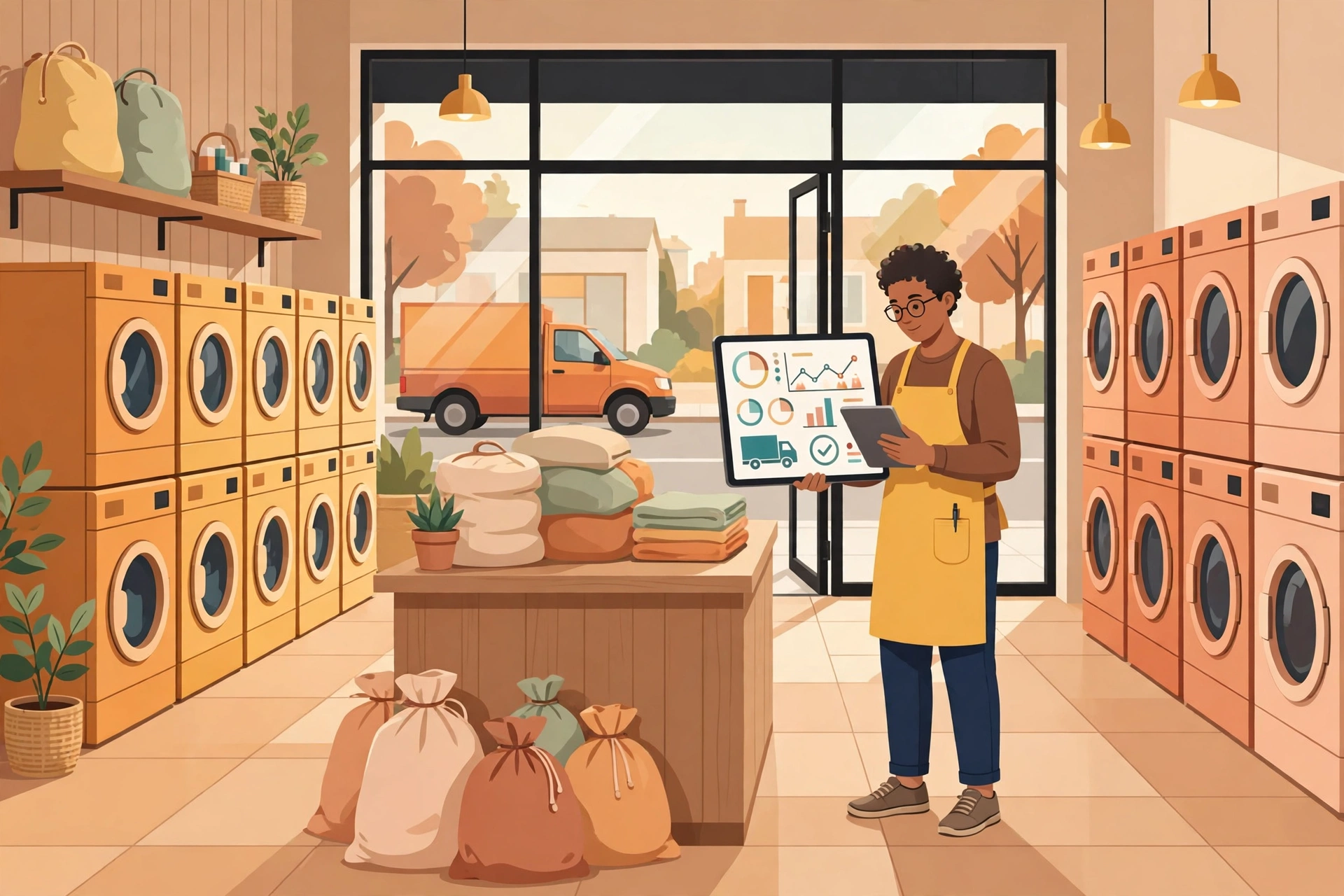
A laundromat does not make money from washers. It makes money from throughput: orders taken without errors, machines turning instead of sitting idle, regulars who come back every week, and a store that keeps running when the owner is somewhere else. Software is what connects those four things. A generic retail register can take a payment, but it cannot track a wash-and-fold order across three days, start a machine from a phone, or tell you which dryer has been out of order since Tuesday.
We ranked five tools on store operations: point of sale and wash-and-fold order tracking, pickup and delivery, machine monitoring, loyalty and marketing, and unattended or multi-store management. Cents takes the top spot as the most complete ecosystem, but it is not the cheapest way to run a single self-serve store, and the right pick depends heavily on what kind of store you run.
Quick-Pick Summary
| Tool | Best For | Starting Price | Free Tier |
|---|---|---|---|
| Cents | Growing stores and multi-store operators | $89/month | No |
| CleanCloud | Dry cleaners and delivery-focused shops | Pricing not published (tiered by order volume) | No (14-day free trial) |
| Curbside Laundries | Wash-and-fold specialists | Pricing not published (third-party reports $149–$260/month) | No |
| Wash-Dry-Fold POS | Keeping your existing machines and card systems | Quote only (third-party reports around $85/month) | No |
| Laundry Boss | Machine monitoring and unattended stores | $4 per machine/month (third-party reports) | No |
Comparison Table
| Feature | Cents | CleanCloud | Curbside Laundries | Wash-Dry-Fold POS | Laundry Boss |
|---|---|---|---|---|---|
| Wash-and-fold POS | Yes | Yes | Yes, specialty | Yes, specialty | Via POS integrations |
| Pickup and delivery | Yes, Gig network or own fleet | Yes, driver app and route optimization | Yes, online scheduling and routes | Yes, extra cost | Delivery via platform tools |
| Machine monitoring | Yes, machine integration | Yes, washer and dryer tracking | Order and store reports | Works with existing card systems | Yes, real-time machine dashboard |
| Loyalty and marketing | Yes, built-in marketing on Growth | Yes, loyalty points, SMS, email, promos | SMS and customer reports | Yes, gift cards and loyalty | Yes, loyalty programs |
| Unattended-store management | Yes, remote Business Manager | Yes, multi-station cloud system | Yes, multi-location dashboard | Yes, multi-location from one account | Yes, remote multi-location dashboard |
| Dry-cleaning depth | Yes | Yes, garment tags and assembly | Limited | Limited | Limited |
| Starting price | $89/month | Not published | Not published (third-party $149–$260) | Quote only (third-party ~$85) | $4/machine/month (third-party) |
1. Cents
Best for: Growing laundromats and multi-store operators who want one ecosystem
Cents is the industry-leading all-in-one point of sale and business management system for laundromats and dry cleaners, and its pitch is breadth: one vendor for the counter, the back office, delivery, marketing, payments hardware, and reporting. At the counter, the POS and Business Manager handle wash-and-fold orders from intake to pickup with a branded website, live sales tracking, and order visibility. Higher tiers add the pieces that actually grow a store: built-in marketing, online ordering, pickup and delivery through the Cents Gig Driver Network without hiring drivers, or a full in-house fleet with route optimization, geofenced delivery zones, and a branded customer app.
Pricing: Starter $89/month, Growth $249/month, Ultimate $399/month, all from Cents’ own pricing page. The tier split matters more than the headline: delivery and marketing live on Growth, and running your own fleet with a branded app needs Ultimate. Hardware bundles cost extra on top of the subscription, and Cents runs on its own payment hardware, so factor both into the first-year cost. Read the contract closely before signing, since third-party comparisons report early-termination terms on some plans.
Pros:
- The deepest single-vendor ecosystem here: counter, delivery, marketing, fleet, and financing-style add-ons in one account.
- The Gig Driver Network is a real advantage for a store that wants delivery revenue without hiring drivers or buying a van.
- Geofenced delivery zones with custom pricing by area or ZIP code keep delivery routes profitable instead of hopeful.
- Live sales tracking and order visibility from anywhere, which is the whole point of owning a second store.
Cons:
- The features most owners actually want — delivery, marketing, online ordering — start at $249/month, not $89.
- Own payment hardware and extra hardware bundles push the true first-year cost well above the subscription.
- A bigger, more corporate platform than the owner-built tools here, so support can feel less personal.
Cents wins because it is the only tool here that covers the full journey from a first-time walk-in to a scheduled weekly pickup customer without bolting on a second vendor. Budget for Growth, not Starter, and price the hardware before you commit. For a single self-serve store with no delivery ambitions, it is more system than you need — but for an operator planning a second store, it is the obvious default.
2. CleanCloud
Best for: Dry cleaners and delivery-focused shops that need garment-level control
CleanCloud is the global industry name in laundry and dry-cleaning software, and its strength is depth on the plant side: garment tag printing, barcode scanning, assisted and automated assembly, folding tracking, and subscriptions sit alongside the counter POS, customer CRM, two-way messaging, and loyalty and referral tools. Pickup and delivery is a first-class feature, not an add-on: customer apps, a website booking tool, Uber and DoorDash integrations, route optimization, a driver app with tracking, and locker integration all appear on the Pro and Grow tiers. Machine payment integrations, including the Speed Queen app, connect the software to the machines customers already pay through.
Pricing: CleanCloud’s public pricing page lists three tiers — Lite, Pro, and Grow — sized by order volume at 500, 2,000, and 3,000 orders per month, with a 14-day free trial, but it does not display dollar prices on the page itself, so you need a quote from the vendor. Third-party listings disagree widely, reporting Lite anywhere from around $30 to $99/month, which is exactly why we do not print a single figure here: get the quote for your order volume. One third-party comparison from September 2026 also reports US card processing at 2.25% + $0.20 through CleanCloud; confirm that rate with the vendor, since processing terms change.
Pros:
- The strongest dry-cleaning toolkit here: garment tags, assembly workflows, and order tracking built for a plant, not adapted from a generic register.
- Delivery depth matches Cents: driver app, route optimization, locker integration, and third-party courier options.
- Order-volume tiers mean a small shop is not paying a multi-store price — if the quoted price matches the volume.
- Marketing is included across tiers: SMS, email, push, loyalty points, referral schemes, and promo codes.
Cons:
- No published dollar pricing on its public page, so comparison shopping requires a sales conversation.
- Priced by order volume, so a fast-growing store can be pushed into a higher tier by success alone.
- Dry-cleaning depth is overkill for a pure self-serve store that just needs a register and machine monitoring.
CleanCloud is our pick if your business includes dry cleaning or a serious delivery route. A self-serve-only store will find it heavy, but a shop that tags garments, assembles orders, and runs drivers will use features the other tools here simply do not have. Get the volume-tiered quote in writing before you compare it against Cents’ flat tiers.
3. Curbside Laundries
Best for: Wash-and-fold specialists who want software built by laundromat owners
Curbside Laundries is wash-and-fold POS software designed by laundromat owners for laundromat owners, and that origin shows in the workflow: over-the-counter sales, wash-and-fold orders, and pickup and delivery orders tracked from beginning to end, with online scheduling through a customer web app. Multi-location owners get a central platform covering customer information, employee details, orders, and delivery routes across stores from one login. A hardware package is available to get started, and the system supports dry cleaning alongside wash-and-fold.
Pricing: Curbside does not publish pricing on its public pages, so treat all figures as third-party: older listings report $149/month, while a 2026 listing reports from $260/month. That spread is a warning, not a price — request a current quote that includes the hardware package, since hardware pricing is also undisclosed. The honest way to evaluate Curbside is a demo and a written quote, not a comparison table figure.

Pros:
- Built by operators who ran stores, so the wash-and-fold flow matches how attendants actually work the counter.
- Strong multi-location management from a single platform, including employees, orders, and routes.
- High customer satisfaction scores on third-party review sites, with support repeatedly praised.
- Handles dry cleaning as well as wash-and-fold, so a mixed store does not need two systems.
Cons:
- No published pricing, and third-party figures span $149–$260/month — you cannot budget without a quote.
- Hardware pricing is also undisclosed, which makes the first-year cost hard to pin down.
- Less of an all-in-one ecosystem than Cents: no gig driver network or built-in financing-style add-ons.
Curbside is the pick for an owner who wants wash-and-fold done right by people who have done it themselves. It loses points for pricing opacity, and we would not sign anything without a written quote covering software and hardware together. But for a wash-and-fold-first store, the workflow fit is the best on this list after Cents.
4. Wash-Dry-Fold POS
Best for: Independent stores keeping their existing machines and card systems
Wash-Dry-Fold POS is the keep-what-you-have option. Built by the team behind Liberty Laundry in Tulsa, Oklahoma, and running real stores since 2016, it is a cloud POS that works alongside the machines and card systems a store already owns — Speed Queen and Alliance, Laundroworks, ESD, FasCard, LaundryCard, and SpyderWash — instead of requiring a hardware swap. At the counter it handles wash-and-fold orders with an integrated scale, barcode scanning, receipt and label printing, card payments, retail sales, discounts, gift cards, and loyalty. Every attendant gets their own login, and voids, discounts, and till counts are tracked, which is how owners catch cash discrepancies without standing at the register.
Pricing: consultation required — the vendor does not publish a price, and third-party listings say so explicitly. A 2026 third-party comparison reports around $85/month with flat card processing and no annual contract, and delivery as an extra cost. Treat that as a ballpark, not a quote: the real price depends on your setup, and the no-long-term-contract term is the part worth confirming in writing.
Pros:
- Keeps your existing machines and card systems, avoiding the most expensive part of switching software.
- Every feature is included at the base price, with no tier-gated wash-and-fold tools.
- Attendant controls and theft-prevention reporting — voids, discounts, till counts — protect the owner who cannot be in the store.
- Training and support are included, and multiple locations run from one account.
Cons:
- Quote-only pricing means you cannot compare it head-to-head without a sales call.
- Built around Windows hardware and more in-store focused; pickup and delivery costs extra.
- Less of a marketing and delivery ecosystem than Cents or CleanCloud if growth means routes, not just a fuller counter.
Wash-Dry-Fold POS is our pick for the independent owner with a store that already works and does not want to rip anything out. If your machines, card readers, and attendants are settled, this is the lowest-disruption upgrade on the list. If delivery is central to your growth plan, price that add-on before choosing it over Cents.
5. Laundry Boss
Best for: Unattended stores and owners who manage by machine data
Laundry Boss takes a different angle from the POS tools above: it turns existing washers and dryers into connected, data-driven machines. A cloud dashboard gives real-time visibility into machine usage, costs, transactions, and customer behavior, with secure web access from any device. Owners monitor machine status, track usage patterns by time of day, pull complete reports for every transaction, manage pricing and promotions, and run loyalty programs. It integrates POS, digital wallet, mobile app, and kiosk payment options, including cashless transactions, credit cards, bills, and coins, and it supports remote management of multiple locations with maintenance alerts and employee management. It works with most major commercial machine brands.
Pricing: third-party listings consistently report $4 per month per machine, with no free version or trial reported. That per-machine model is the story: a 30-machine store pays around $120/month, while a 60-machine store pays around $240, so the cost scales with the floor, not with a tier. Confirm the current rate and any platform fees with the vendor, since the figure comes from third-party listings rather than a published vendor price page.
Pros:
- The clearest machine-visibility story here: usage, revenue, and status per machine, from anywhere.
- Per-machine pricing scales honestly with store size instead of jumping between tiers.
- Maintenance alerts and usage patterns let an owner fix a dead dryer before customers notice it.
- Multi-location remote management suits the unattended model, where the owner is the exception handler, not the attendant. Owners coordinating staff across several stores face similar scheduling questions to those covered in our best AI tools for cleaning companies guide.
Cons:
- The $4 per machine figure is third-party reported, not vendor-published, so verify it and ask about platform fees.
- It is a machine-management platform first, not a full wash-and-fold POS — a delivery-heavy store may still need a counter system.
- No free trial reported, so evaluate it on a demo and references from similar stores.
Laundry Boss is our pick for the unattended-store operator and the multi-store owner who manages from a dashboard. If your biggest question each morning is “which machines earned, which broke, and which sat idle,” nothing else here answers it as directly. Pair it with a counter POS if you run a big wash-and-fold counter; run it alone if your store mostly runs itself.
How We Picked
We scored each tool on the five things that decide whether a laundry business runs well: POS and wash-and-fold order tracking, pickup and delivery, machine monitoring, loyalty and marketing, and unattended or multi-store management. Order accuracy was weighted highest, because a lost bag costs more than any monthly subscription. Machine visibility came next for self-serve and unattended stores, while delivery depth mattered most for wash-and-fold growth. Pricing was checked against the vendors’ pricing pages in October 2026: Cents publishes its tiers, while CleanCloud, Curbside, and Wash-Dry-Fold POS do not publish dollar prices, so their figures are labeled third-party or quote-only, and Laundry Boss’s per-machine rate is third-party reported. Confirm every quote-only price before you buy.
One deliberate exclusion: Geelus. It is a capable laundry platform, but its own site positions it as Australian laundry software, which makes it a weak recommendation for US store owners reading a US-focused guide. WashMetrix was also checked and rejected — despite the similar name, it is car-wash membership software, not laundry software. For owners comparing other service-business systems, the staff-scheduling and route-management thinking in our best AI tools for cleaning companies guide covers similar ground for running crews across sites. Owners weighing route-based service work can also compare the scheduling and route thinking in our best AI tools for landscaping businesses guide.
Frequently Asked Questions
What is the best AI tool for laundromats in 2026?
For most growing laundromats, Cents is the strongest overall pick: it covers the counter, delivery, marketing, and multi-store reporting in one system, starting at $89/month with delivery features on the $249/month Growth plan. Single self-serve stores should look at Laundry Boss for machine monitoring, and dry cleaners should trial CleanCloud for garment-level control.
How much does laundromat POS software cost?
Expect $89–$399/month for Cents’ published tiers, depending on whether you need delivery and fleet tools. CleanCloud, Curbside Laundries, and Wash-Dry-Fold POS do not publish dollar prices — third-party listings report roughly $85–$260/month for those tools, so get a written quote. Laundry Boss is reported at $4 per machine per month, which scales with your machine count.
Do I need special software, or can I use a regular retail POS?
A regular retail POS can take a payment, but it cannot track a wash-and-fold order across days, handle weigh-based pricing and bag tags, run pickup and delivery routes, or monitor machines. Laundry-specific software exists because the order lifecycle — drop-off, wash, dry, fold, ready, pickup — has no equivalent in ordinary retail.
Can I run an unattended laundromat with software alone?
Software covers payments, machine monitoring, alerts, and reporting, but it does not replace everything: you still need someone for cleaning, machine repair, and the occasional customer problem. The realistic model is lightly attended or remotely managed, with Laundry Boss-style machine dashboards plus a card or app payment system, rather than a store nobody ever visits.
What is the difference between Cents and CleanCloud?
Cents is the broader US ecosystem: counter POS, delivery via its driver network or your own fleet, marketing, and multi-store management, with published tiers from $89/month. CleanCloud is deeper on dry cleaning and garment handling, with tag printing, assembly workflows, and order-volume tiers — but it does not publish dollar prices, so compare it on a written quote, not a headline rate.



0 comments