Best AI Tools for Wineries and Tasting Rooms in 2026
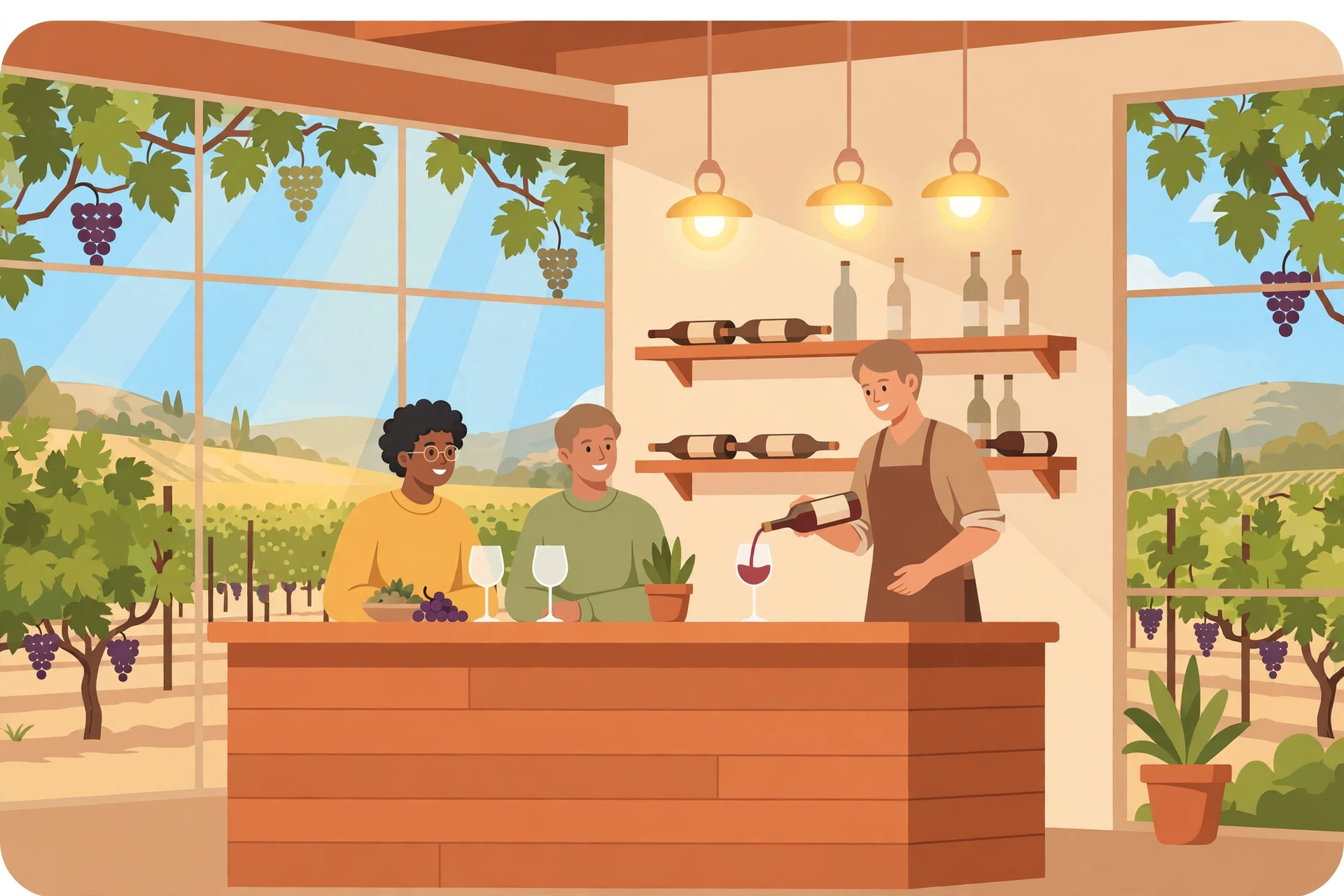
A winery’s online store is not a normal online store. The same customer buys a bottle at the tasting-room counter on Saturday, joins the wine club on Sunday, swaps a shipment in March, picks up a release in person in May, and expects the winery to know — legally — whether that shipment can cross into Texas or Pennsylvania. A generic ecommerce platform handles the checkout and leaves the rest to spreadsheets and add-ons. The tools below are built for wineries, so the club, the register, the reservations book, and the shipping rules share one customer record.
We scored five platforms on the four jobs that actually decide a winery purchase: wine club management, tasting-room POS and reservations, allocation releases, and shipping compliance cost. The winner for most established wineries is Commerce7, but the cheapest starting point and the best allocation tool are different products, and the right answer depends on how much you sell direct-to-consumer each year.
Quick-Pick Summary
| Tool | Best For | Starting Price | Free Tier |
|---|---|---|---|
| Commerce7 | Most established wineries | $59/month (Lite) | No |
| vinSUITE | One vendor, one price, all-in-one | $249/month | No |
| OrderPort | Predictable cost, no percentage fee | $0/month (One plan) | Yes, One plan at $0 |
| eCellar | Allocations and multi-brand wineries | $450/month (third-party-reported) | No |
| Vinoshipper | Small producers starting DTC sales | No monthly fee | No monthly fee; per-bottle fees apply |
Commerce7: Best for Most Established Wineries
Best for: wineries that want the full DTC stack from one vendor
Commerce7 is the direct-to-consumer platform built for wineries, covering ecommerce, wine club and subscriptions, tasting-room POS, reservations, CRM, and analytics in one system. It is also the natural landing spot for wineries leaving WineDirect: Commerce7 acquired WineDirect’s software business, and WineDirect Classic shuts down on December 31, 2026, so any winery still on Classic needs a migration plan now, not in December.
Pricing
Commerce7 prices by annual DTC revenue rather than by feature tier. The Lite plan costs a flat $59 per month with no transaction fees, for wineries under $100,000 in annual DTC revenue in the US and Canada, and it includes POS, ecommerce, club management, CRM, reservations, and analytics. The Basic plan is third-party-reported at $149 per month plus a 1.5% transaction fee, for wineries up to $600,000 in annual DTC revenue, and it adds allocations, multi-location support, and advanced customization. The Pro plan is third-party-reported at $399 per month plus a 1% transaction fee, for wineries up to $4 million in DTC revenue. Contracts are month-to-month unless otherwise negotiated, which is unusually flexible for this market. Card processing runs through a separate processor, so ask for that rate in writing before you compare totals.
Pros and cons
Pros:
- Full DTC stack — store, club, POS, reservations, CRM — on one customer record
- Lite plan gives small wineries the whole platform for a flat $59 per month with no transaction fee
- Allocations, multi-location support, and restaurant tools included from Basic upward
- Month-to-month contracts, plus free migration help for wineries moving from WineDirect
Cons:
- The transaction fee on Basic and above grows with your sales, so success raises your software bill
- The pricing page lists revenue bands and features but does not render dollar figures in every view, so confirm your band and fee in writing
- Card processing rates are not published on the pricing page, which makes true total cost harder to compare
vinSUITE: Best All-in-One Platform
Best for: wineries that want one vendor, one price, and no tier maze
vinSUITE takes the opposite approach to Commerce7’s revenue bands: one plan, everything included, for one monthly price. Tasting-room POS, wine club, ecommerce, CRM, and its vinSIGHT analytics sit on a single backend, so a club member’s tasting-room purchase, online order, and shipment history all feed the same profile and the same reports.
Pricing
vinSUITE pricing starts at $249 per month, based on transaction volume across all channels, with larger wineries scaling up from there. Standard implementation is a $999 one-time fee, and plans are annual commitments. Payments are processor-agnostic: vinSUITE does not mark up processing, and wineries negotiate their own rate with their processor. That single-price model makes budgeting simple, but the annual term means you should run a full club cycle — signup, shipment, skip, and pickup — in the demo before signing.
Pros and cons
Pros:
- One plan with everything included: no feature gating between tiers
- vinSIGHT analytics, including churn prediction, included at no extra cost
- Processor-agnostic payments, so you keep your negotiated card rate
- ShipCompliant integration for compliance checks on orders
Cons:
- Annual commitment, where Commerce7 offers month-to-month
- $999 implementation fee on top of the monthly price
- Starting price is higher than Commerce7 Lite or OrderPort Plus, so small wineries pay more before they grow
OrderPort: Best for Predictable Costs
Best for: wineries that refuse to hand over a percentage of every sale
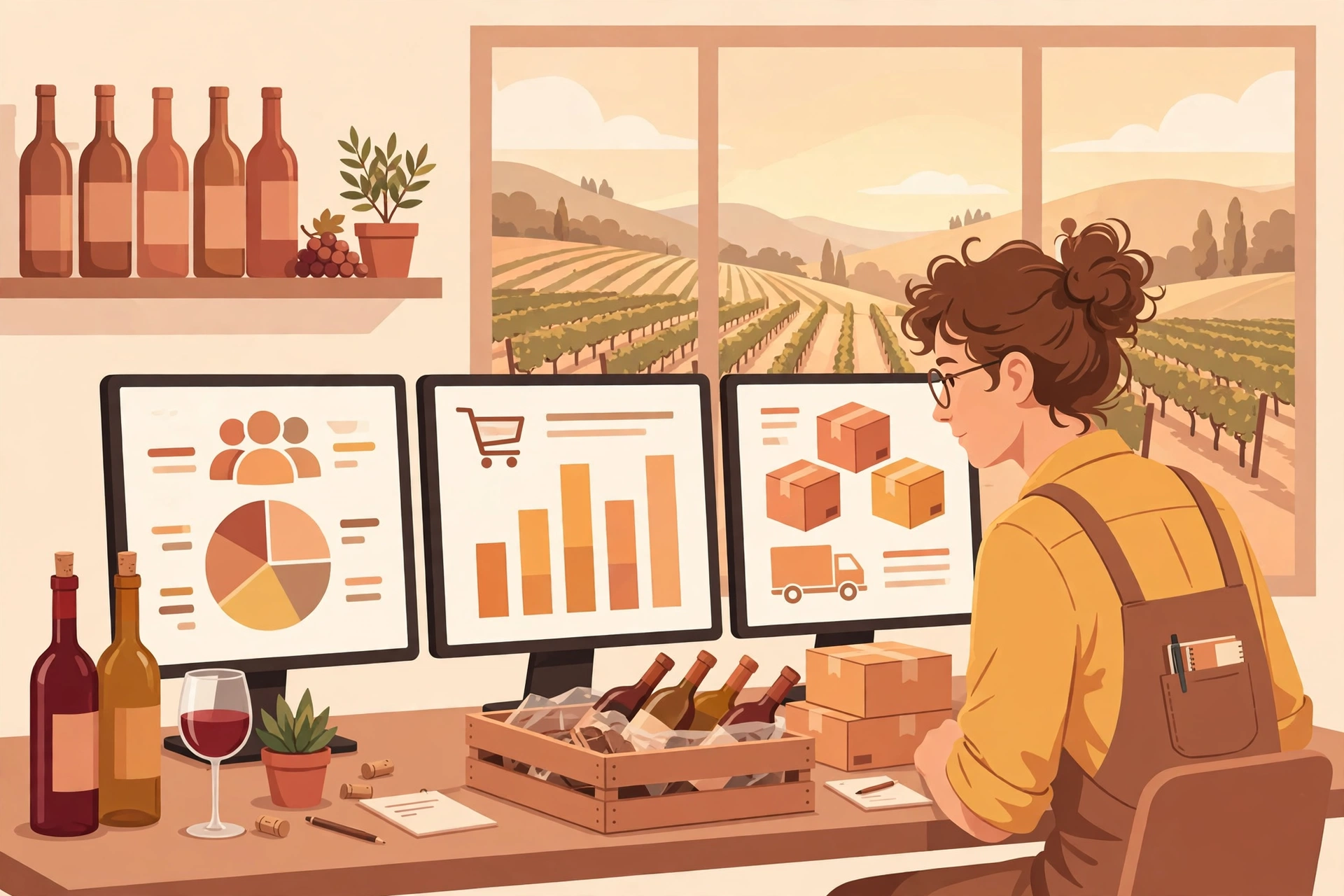
OrderPort is an all-in-one commerce platform for wineries and cideries, covering POS, ecommerce, wine clubs, reservations, CRM, marketing, payments, shipping, and reporting. Its selling point is blunt: OrderPort takes no share of winery sales. Your software bill does not rise just because you had a great release weekend.
Pricing
OrderPort’s plans are third-party-reported at $0 per month for the One plan (for new, limited-production wineries), $150 per month for Plus, from $300 per month for Pro, and from $400 per month for Restaurant, which adds restaurant POS and table service. A one-time onboarding fee starting at $1,000 applies. Because there is no percentage fee, OrderPort’s total cost stays flat as sales grow — the mirror image of Commerce7’s model, and the reason high-volume wineries should run both quotes at their real sales number before deciding.
Pros and cons
Pros:
- No percentage of sales: the monthly fee is the fee, whatever you sell
- $0 One plan gives tiny producers a real starting point
- POS, club, reservations, and marketing in one system
- Restaurant plan covers wineries with a full food program
Cons:
- Onboarding starts at $1,000, so the first year costs more than the monthly price suggests
- Checkout and account pages stay on OrderPort’s hosted pages, which limits how fully the store matches a custom site
- Higher tiers are quoted rather than list-priced, so budget with a written breakdown
eCellar: Best for Allocations and Multi-Brand Wineries
Best for: wineries that sell by allocation or run several brands
eCellar is a DTC platform for wineries with a unified customer record across tasting-room POS, mobile app, ecommerce, wine club, email campaigns, reservations, and real-time multi-location inventory. Its strength is the hard end of winery selling: allocation releases where a small group of customers gets first access to limited wines, and multi-brand operations where one customer buys across labels without creating duplicate records.
Pricing
eCellar pricing is third-party-reported starting at $450 per month, rising by sales band to around $1,250 per month, with no percentage fee on sales. That is the highest entry price in this list, so eCellar only makes sense where allocations or multi-brand selling are core revenue, not a side feature. Get the sales-band thresholds in writing: the band you land in after a strong release quarter is the price you actually pay.
Pros and cons
Pros:
- Strong allocation support for limited releases and mailing-list wines
- Unified customer record across brands, locations, and channels
- Live customer service is a stated focus, which matters during a release rush
- Real-time multi-location inventory for wineries with more than one tasting room
Cons:
- Highest starting price here, at a third-party-reported $450 per month
- Pricing is banded and quoted, so the headline figure is a floor, not a promise
- Overkill for a single-label winery whose main need is a simple club and store
Vinoshipper: Best for Small Producers Starting Out
Best for: new or small wineries with few state permits
Vinoshipper works differently from the other four. Rather than selling you a store and leaving compliance to a separate tool, it handles compliance itself: it holds the shipping permits and manages the tax and reporting side of direct shipping, so a small producer can sell into states where it holds no permits of its own. That is why it is the usual first step for wineries that are too small for a full platform plus a compliance subscription.
Pricing
Vinoshipper charges no monthly fee. Its fees are third-party-reported at 1.85% of sales plus $0.75 per bottle, with card processing and compliance included in that figure. At low volume that is the cheapest way to start selling wine online legally. At high volume it becomes the most expensive option here: the per-bottle fee never stops growing, and a winery shipping thousands of cases a year will pay far more than a flat monthly platform plus its own compliance subscription.
Pros and cons
Pros:
- No monthly fee, so starting costs are close to zero
- Compliance handled for you, including states where you hold no permits
- Card processing included in the reported fee structure
- Connects to storefronts such as Shopify, so you are not locked into one store design
Cons:
- The per-bottle fee makes it the priciest option at scale — model it at your real case volume
- You sell under Vinoshipper’s compliance umbrella rather than building your own permits, which some wineries see as a long-term dependency
- Not a full winery platform: tasting-room POS and club depth are thinner than Commerce7, vinSUITE, or OrderPort
The Compliance Layer Every Winery Still Needs
Four of the five platforms above handle the store, the club, and the register, and then hand shipping compliance to a specialist. The standard specialist is Sovos ShipCompliant, which runs real-time compliance checks, rooftop-level tax determination, license tracking, and automated excise and sales tax reporting, and integrates with ecommerce, POS, and fulfillment systems. Its pricing is quote-only and tiered by business size, so budget it as a separate line item and ask for the tier thresholds before you sign. Vinoshipper is the exception: it bundles compliance into its per-bottle fee instead. Either way, compliance is not optional — shipping wine into a state without the right permit risks fines and, in the worst case, your license — so confirm in the demo that a shipment to a restricted state is blocked or flagged before payment, not after.
How We Picked
We compared these platforms on wine club management (signup, skip, swap, and will-call pickup), tasting-room POS and reservations, allocation releases, and the true cost of shipping compliance at realistic sales volumes, weighting club and compliance highest because a club that leaks members and a shipment that breaks state rules cost a winery directly. Pricing checked against the vendors’ pricing pages in November 2026; where a vendor publishes no firm list price, we say so and label third-party-reported figures as such. Confirm any quote in writing before you buy, and price every platform at your actual DTC sales volume — the headline monthly fee is the smallest part of the bill once percentage fees and compliance are added.
Final Verdict
- Most established wineries → Commerce7. The fullest DTC stack, month-to-month, with a genuinely useful $59 Lite plan for small producers.
- One vendor, one price → vinSUITE. Everything included, analytics included, and no percentage fee — accept the annual term and the $999 implementation fee.
- Predictable cost at volume → OrderPort. No percentage of sales; the $150 Plus plan is the value pick for a craft winery running a full DTC business.
- Allocations or several brands → eCellar. Pay the higher entry price only if limited releases or multi-brand selling drive your revenue.
- Just starting out → Vinoshipper. No monthly fee and compliance handled for you; plan your exit to a flat-fee platform before the per-bottle fees overtake it.
Our specific opinion: most wineries overbuy on store design and underbuy on club operations. The demo that matters is not the homepage — it is a member skipping a shipment, swapping a bottle, choosing will-call pickup, and then a blocked shipment to a state you cannot legally ship to. Run that sequence on every platform, and buy the one your tasting-room staff can run on a packed Saturday without calling support.
For related picks on running a hospitality business, see our guides to the best AI tools for hotels, the best AI tools for restaurants, and the best AI tools for event planners.



0 comments