5 Best AI Tools for Grocery Stores in 2026
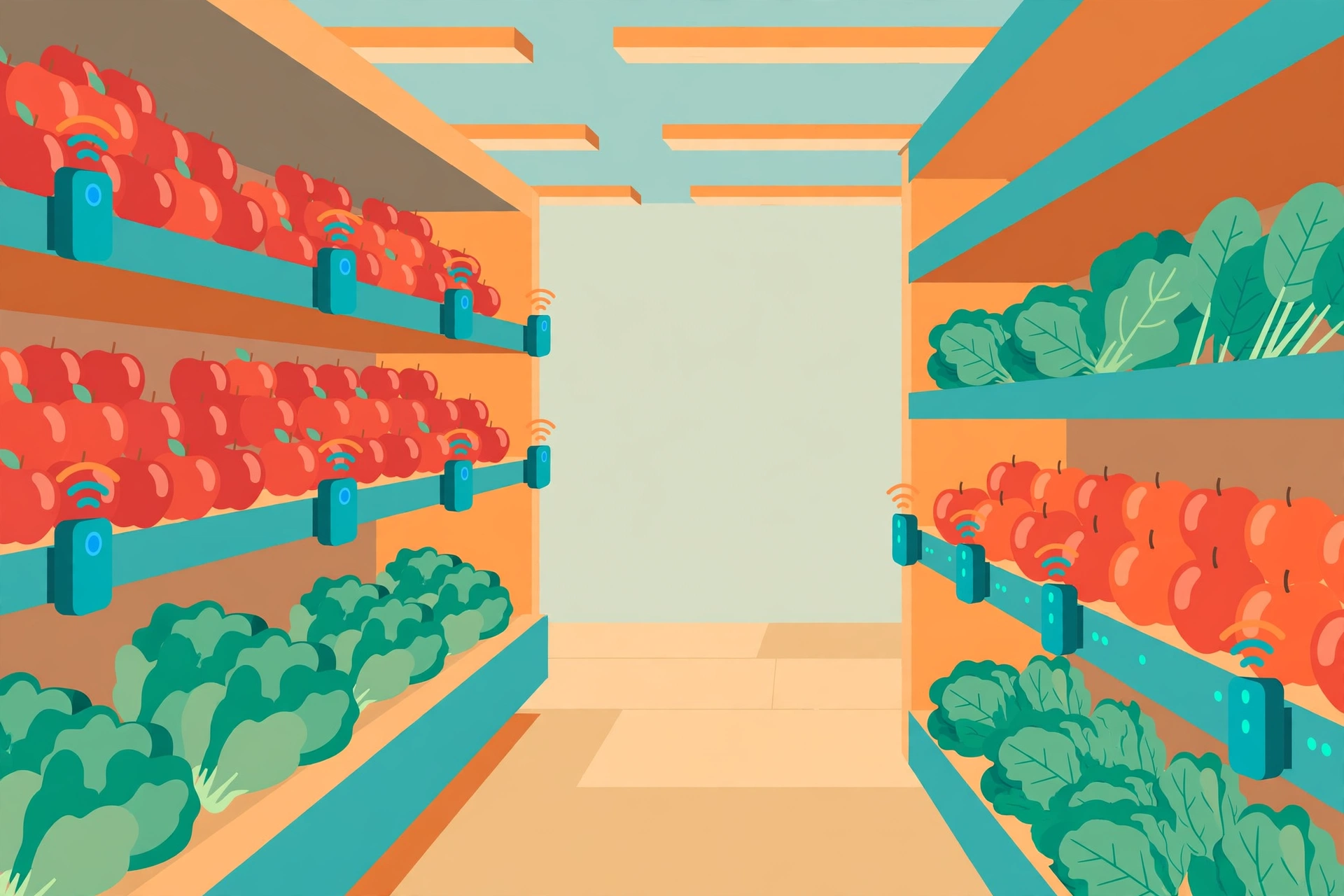
Grocery stores run on margins so thin that a few points of shrink can erase a week’s profit. Fresh departments are where the money leaks fastest: produce wilts, meat spoils, and a wrong order on Friday means empty shelves on Saturday and a dumpster full of unsold stock on Monday. That is exactly the problem the tools in this list exist to solve. We compared AI platforms that forecast demand, automate ordering, watch shelves, and fix pricing, scoring each one on shrink reduction, ordering automation, self-checkout and shelf support, and per-store cost. Afresh takes the top spot because it is built specifically for fresh departments and has the deepest real-world proof, with Albertsons running it across more than 2,200 stores. The other four picks each win a different kind of store, from the independent grocer that cannot afford a big software bill to the national chain replacing paper price tags across thousands of locations.
Quick picks: the 5 best AI tools for grocery stores at a glance
| Tool | Best For | Starting Price | Free Tier |
|---|---|---|---|
| Afresh | Fresh ordering and shrink reduction | Quote only | No |
| Upshop | Whole-store operations in one platform | Quote only | No |
| Focal Systems | Shelf visibility and out-of-stock alerts | Setup fee + monthly fee | No |
| Shelf Engine | Pay-only-for-what-sells ordering | Results-based (no upfront fee) | No |
| VusionGroup | Electronic shelf labels and pricing accuracy | Quote only | No |
How we scored these tools
Every tool here was judged on the four things that decide whether a grocer actually makes money from it. Shrink reduction came first: does the vendor publish credible results on waste and out-of-stocks, and do those results come from named retailers rather than anonymous case studies? Ordering automation came second: how much of the daily order does the AI write by itself, and does a department manager still have to double-check every line? Shelf and checkout support came third: does the tool help keep shelves full and prices right, which is what shoppers actually notice? Per-store cost came last, because a tool that costs more but cuts waste by half is cheaper than a bargain tool that changes nothing. Pricing was checked against the vendors’ own pages and announcements in November 2026. Four of the five tools do not publish prices, so where a price is not listed we say so plainly instead of guessing.
1. Afresh
Best for: fresh ordering and shrink reduction
Afresh is the most focused tool on this list. It does one job — ordering fresh food — and it does it with AI models trained on each retailer’s own sales, inventory, waste, and promotion history. The system produces a daily recommended order for every item in produce, meat, seafood, deli, bakery, and dairy, and it forecasts store demand 35 days out, so buyers can see a holiday spike coming instead of reacting to it. Department managers review the recommendation rather than building orders from scratch, and the platform accounts for messy fresh-food data such as unmeasured loss from moisture evaporation in meat.
The proof is unusually concrete for grocery software. Albertsons rolled Afresh out to produce departments in more than 2,200 stores, then extended it to meat, seafood, bakery, and deli, so by October 2025 the system ran in all five fresh departments of every Albertsons store. Stater Bros. expanded its Afresh deployment across its entire fresh operation in early 2026 after a successful produce rollout. Afresh says its ordering recommendations are over 90% automated, which is the number that matters for a department manager who used to spend hours on a clipboard.
Pricing: Quote only. Afresh does not publish prices; cost is agreed per retailer based on store count and departments covered. Expect an enterprise conversation, not a self-serve checkout.
Pros:
- Purpose-built for perishables, including random-weight and bulk items that generic ordering tools handle badly
- Forecasts 35 days out and weighs promotions, holidays, seasonality, and day-of-week patterns
- Strongest named-retailer proof in the category, led by Albertsons at 2,200+ stores
- Distribution-center forecasting (DC Buying) connects store demand to warehouse buyers
Cons:
- No published pricing, so small grocers cannot size the cost without a sales conversation
- Built for fresh departments first; center-store coverage is newer and less proven
2. Upshop
Best for: whole-store operations in one platform
Upshop is the broadest platform here. Formed from the 2024 merger of Upside and Invafresh, it unifies forecasting, ordering, fresh production, waste prevention, and e-commerce orchestration into one operating system, with five suites covering fresh, waste, inventory, commerce, and compliance. Its Total Store Ordering product, launched in July 2025, generates one demand signal for every SKU in the store and automates replenishment across all departments, not just fresh. The pitch is simple: one system instead of five disconnected tools, so a promotion, a production plan, and an order all draw on the same numbers.
Upshop publishes the boldest results claims on this list. The company says Total Store Ordering cuts shrink by over 50%, reduces out-of-stocks by over 75%, lifts sales by 3–5%, and pushes on-shelf availability to 99.5%. Those are vendor-reported figures, not independent audits, so treat them as the ceiling rather than a guarantee. The scale is real either way: Upshop says more than 450 retailers and 50,000 stores run its software, and its customer stories include a Midwest grocer that expanded e-commerce capacity by 20% while cutting labor costs. For a chain that wants AI across the whole store rather than one department at a time, Upshop is the natural shortlist pick.
Pricing: Quote only. Upshop does not publish prices; pricing is agreed per retailer based on store count and the suites selected.
Pros:
- Only tool here that covers ordering, production, waste, and e-commerce in a single platform
- Total Store Ordering applies AI to every department and SKU, including center store and direct-store-delivery items
- Large installed base of 450+ retailers and 50,000+ stores
- Fresh production planning (deli, bakery, ready-to-eat) is built in, not bolted on
Cons:
- Vendor-reported results (50%+ shrink reduction) are not independently verified
- Platform breadth means a longer rollout than a single-purpose tool; overkill for a one- or two-store operator
3. Focal Systems
Best for: shelf visibility and out-of-stock alerts
Focal Systems takes a different angle from the ordering tools above: it watches the shelf. Small battery-powered ShelfCam cameras mount on shelf edges and photograph the opposite shelf every hour. Computer vision models read each image and report what is present, what is empty, what is misplaced, and what is misticketed, then FocalOS turns that read into a prioritized task list for store associates — restock this gap first, fix this planogram next, pull this from the back room now. Optional modules add produce monitoring, top-stock checks, electronic shelf label integration, and a Theft Spotter.
The deployment numbers are striking. Focal says it has more than 300,000 cameras deployed, and at Morrisons in the UK it installed over 200,000 shelf-edge cameras across 498 supermarkets in eight months, with Morrisons crediting the project with improving availability by more than two percentage points. Focal reports 95% accuracy from its own audits and from store associate measurements. A typical store installs in a single day or night, and the cameras need no rewiring, which is why the system scales so fast. For a grocer whose biggest problem is not ordering but knowing what is actually on the shelf right now, Focal is the most direct fix.
Pricing: Setup fee plus a monthly service fee, quoted per retailer. Total cost depends on store count and size, the services selected, and the length of commitment. Focal says customers typically see a return several times the cost within the first year.
Pros:
- Hourly, store-wide shelf visibility with no manual aisle walks
- Fastest install on this list: a store can be running the next day
- Cameras strip out pixels containing people before analysis, so no shopper images are stored
- Prioritized task lists tell associates exactly what to fix first, instead of handing them a report
Cons:
- Pricing is quote-only and includes hardware costs that the software-only tools avoid
- It watches shelves; it does not write orders, so it works best alongside an ordering tool rather than instead of one
4. Shelf Engine
Best for: pay-only-for-what-sells ordering
Shelf Engine has the most unusual business model on this list, and for a small or regional grocer it is the most attractive. Instead of charging a software subscription, Shelf Engine forecasts demand with AI, automates the purchase orders, pays suppliers directly for the products delivered, and only charges the retailer for what actually sells. Unsold perishables are Shelf Engine’s problem, not yours. The model is called results-as-a-service, and it removes the two things that stop independents from buying AI software: the upfront cost and the risk that it does not work.
The company was founded in Seattle in 2015 and was acquired by retail data platform Crisp in March 2025, with its forecasting technology now integrated into the Crisp platform. Before the acquisition, its platform ran in more than 7,000 stores. In one vendor case study, a regional grocery chain using Shelf Engine grew deli gross margins by 31% over a year, cut waste by 13.5%, and managed 34% more deli items with the same labor. As with Upshop’s figures, that is a vendor-reported case study rather than an independent audit, but the direction is consistent with the model’s incentives: Shelf Engine only profits when the grocer sells more and wastes less.
Pricing: Results-based. There is no published subscription price; the grocer pays a service fee per item sold, set below what the grocer previously lost to waste. Contact Crisp for current terms, since the Shelf Engine offering now sits inside the Crisp platform after the March 2025 acquisition.
Pros:
- No upfront software cost and no inventory risk: the grocer pays only for sold items
- AI forecasting and automated ordering for every SKU, every day, in every store
- Strongest fit for independents and regional chains that cannot fund an enterprise rollout
- Vendor’s incentives align with the grocer’s: it only earns when waste falls and sales rise
Cons:
- Acquired by Crisp in March 2025, so the standalone product’s future roadmap runs through Crisp’s platform
- The per-item-sold fee is not published, so the true cost is hard to compare against a flat subscription
5. VusionGroup
Best for: electronic shelf labels and pricing accuracy
VusionGroup is the hardware-heavyweight of this list. The company, which rebranded to Vusion in January 2026, makes electronic shelf labels (ESLs) and the cloud platform behind them, plus Captana, a computer-vision system that watches shelf availability, and EdgeSense, a smart-rail platform combining labels, cameras, and AI. Together they automate price changes across a whole store in seconds, flag gaps to staff, and keep the price on the shelf matching the price at the till — a mismatch that quietly costs grocers both money and customer trust.
The scale of its deployments is unmatched here. Walmart announced in June 2024 that it would put VusionGroup labels in 2,300 US stores by 2026, then extended the rollout in December 2024 to its entire fleet of about 4,600 stores. In the UK, Morrisons is equipping all 497 of its supermarkets with more than 10.8 million labels, and the Co-op is rolling them out across nearly 2,400 stores. VusionGroup says it serves more than 350 large retailer groups and has sold 650 million labels into 75,000 stores. The trade-off is scope: this is a shelf-edge and pricing platform first, not an ordering engine, so it complements Afresh or Upshop rather than replacing them.
Pricing: Quote only. VusionGroup does not publish prices; cost depends on store count, label volume, and the solutions selected, and is agreed per retailer.
Pros:
- Largest proven deployments in grocery, led by Walmart’s 4,600-store rollout
- Price changes push to every label in seconds, ending the paper-tag lag and pricing errors
- EdgeSense adds computer vision and AI task guidance on top of the labels
- Labels display allergen, nutrition, and origin information, which helps with compliance
Cons:
- Quote-only enterprise pricing with significant hardware costs per store
- Does not forecast demand or write orders, so it needs a companion ordering tool
- The company rebranded to Vusion in January 2026, so older “VusionGroup” references may confuse buyers researching the brand
How we picked these tools
We started with the tools US grocers actually deploy, then filtered for real AI capability rather than marketing labels: demand forecasting, computer vision, or automated ordering had to be core to the product, not a feature on a roadmap slide. Each tool was scored on shrink reduction, ordering automation, shelf and checkout support, and per-store cost, with shrink weighted heaviest because waste is where grocery margin goes to die. Vendor-reported results are attributed as vendor claims throughout; where a figure comes from a case study rather than an independent audit, we say so. Pricing was checked against the vendors’ own pages and announcements in November 2026; confirm before you buy, because enterprise pricing moves with every contract.
If you run a single store or a small chain, start with Shelf Engine’s pay-for-what-sells model, since it costs nothing until it works. If fresh departments are your biggest leak, Afresh is the sharpest tool for that job. If you want one platform across the whole store, Upshop is the pick. If your shelves are full in the back room but empty on the floor, Focal Systems will show you the gaps. And if you are replacing paper price tags anyway, VusionGroup turns that hardware spend into an AI shelf system. For a broader look at AI in food businesses, see our guides to the best AI tools for restaurants and the best AI tools for hotels, and if you run a service business with recurring visits, the best AI tools for cleaning companies covers similar scheduling and route problems.
Frequently asked questions
What is the best AI tool for grocery stores?
Afresh is the best AI tool for most grocery stores because it is built specifically for fresh ordering, where shrink hurts most, and it has the deepest proof, running in all five fresh departments across Albertsons’ 2,200+ stores. Chains that want one platform for the whole store should look at Upshop instead.
How much do AI tools for grocery stores cost?
Most grocery AI tools are quote-only: Afresh, Upshop, Focal Systems, and VusionGroup do not publish prices, and cost depends on store count and scope. Focal Systems charges a setup fee plus a monthly service fee. Shelf Engine is the exception, charging a service fee only on items sold, so there is no upfront software cost.
Can AI really reduce shrink in grocery stores?
Yes, but the size of the reduction depends on the tool and the store. Upshop reports shrink reductions of over 50% from its Total Store Ordering product, and a Shelf Engine case study reported a 13.5% waste reduction in a regional chain’s deli. Both are vendor-reported figures, so treat them as achievable results rather than guarantees, and ask any vendor for references in stores like yours.
Do small grocery stores need AI ordering tools?
Small stores often benefit most, because one bad order hurts more when you have one location. Shelf Engine’s pay-only-for-what-sells model is designed for independents and regional chains that cannot fund an enterprise rollout. Afresh and Upshop are built mainly for larger chains, though regional grocers such as Stater Bros. and Fresh Thyme run Afresh successfully.
What is the difference between Afresh and Upshop?
Afresh focuses on fresh departments: it forecasts demand and writes daily orders for produce, meat, seafood, deli, bakery, and dairy. Upshop covers the whole store, combining ordering with fresh production planning, waste prevention, and e-commerce in one platform. Pick Afresh for the deepest fresh expertise; pick Upshop when you want one system for everything.
Comparison table: the 5 best AI tools for grocery stores
| Feature | Afresh | Upshop | Focal Systems | Shelf Engine | VusionGroup |
|---|---|---|---|---|---|
| Core strength | Fresh ordering | Whole-store operations | Shelf visibility | Risk-free ordering | ESLs and pricing |
| AI demand forecasting | Yes, 35 days out | Yes, whole-store | No (shelf vision) | Yes, per SKU daily | No (pricing + vision) |
| Automated ordering | Yes | Yes | No | Yes | No |
| Shrink reduction claims | 90%+ order automation | 50%+ shrink cut (vendor-reported) | Availability +2 pts at Morrisons | 13.5% waste cut in deli case study | Availability via gap alerts |
| Pricing model | Quote only | Quote only | Setup fee + monthly fee | Pay per item sold | Quote only |
| Free tier | No | No | No | No | No |
| Best for | Fresh departments | Chains wanting one platform | Fixing out-of-stocks | Independents, small chains | Large chains replacing paper tags |



0 comments