Clay vs Apollo: Which One Should Your Sales Team Actually Pay For?

Apollo already finds contacts and runs sequences — so why is everyone also paying for Clay? Or the reverse: if Clay can pull contact data from 150+ providers, why do teams keep buying Apollo?
Here is the short version. Apollo is a database with a sequencer bolted on; Clay is an enrichment engine with no database of its own. Apollo is built for reps who need contacts and outreach in one tab. Clay is built for ops people who need Apollo’s gaps filled — the missing emails and phone numbers Apollo’s 240M+ contact database cannot resolve on its own. Buy one or both based on team size, not features.
The quick verdict
If you are a solo founder or a 5-person team that just needs to start sending cold email this week, buy Apollo and skip Clay for now. If you run a 20+ person sales org where a 10-point lift in phone-number fill rates moves pipeline, buy Apollo for the database and sequences — then add Clay as the enrichment layer on top. If your only question is “do you need both?” — solo sellers do not, large outbound orgs almost certainly should.
At a glance
| Feature | Clay | Apollo |
|---|---|---|
| Pricing | Free; Launch $185/mo ($167 annual); Growth $495/mo ($446 annual); Enterprise custom. Flat workspace pricing — unlimited seats on every plan | Free; Basic $49/seat/mo ($65 monthly); Professional $79/seat/mo ($99 monthly); Organization $119/seat/mo annual only (3-seat min); Enterprise custom |
| Free tier / trial | Free plan with 100 data credits + 500 actions/mo | Free plan with monthly email credits + 2 active sequences |
| Core use case | Waterfall enrichment across 150+ data providers, AI research, and outbound workflows | Contact database (240M+ contacts, 30M+ companies) plus sequencing, dialer, and buying signals in one product |
| Standout feature | Claygent — AI web research that returns structured data into your table in plain language | All-in-one prospecting: database, multichannel sequences, dialer, and buyer intent signals |
| Integrations | CRM sync, sequencers, HTTP API + webhooks (Growth and up) | 200+ integrations, Salesforce and HubSpot embeds, API, and Apollo MCP |
| Support quality | Email on Launch, priority support on Growth | Knowledge base and chat; SSO and admin controls on Organization |
Clay: the enrichment layer that never shows up in the contact count
Clay is a spreadsheet-style workspace where you define enrichment logic once — “find a verified work email for each row, fall back to a second provider if the first misses, push the result to my CRM” — and it runs on every row.
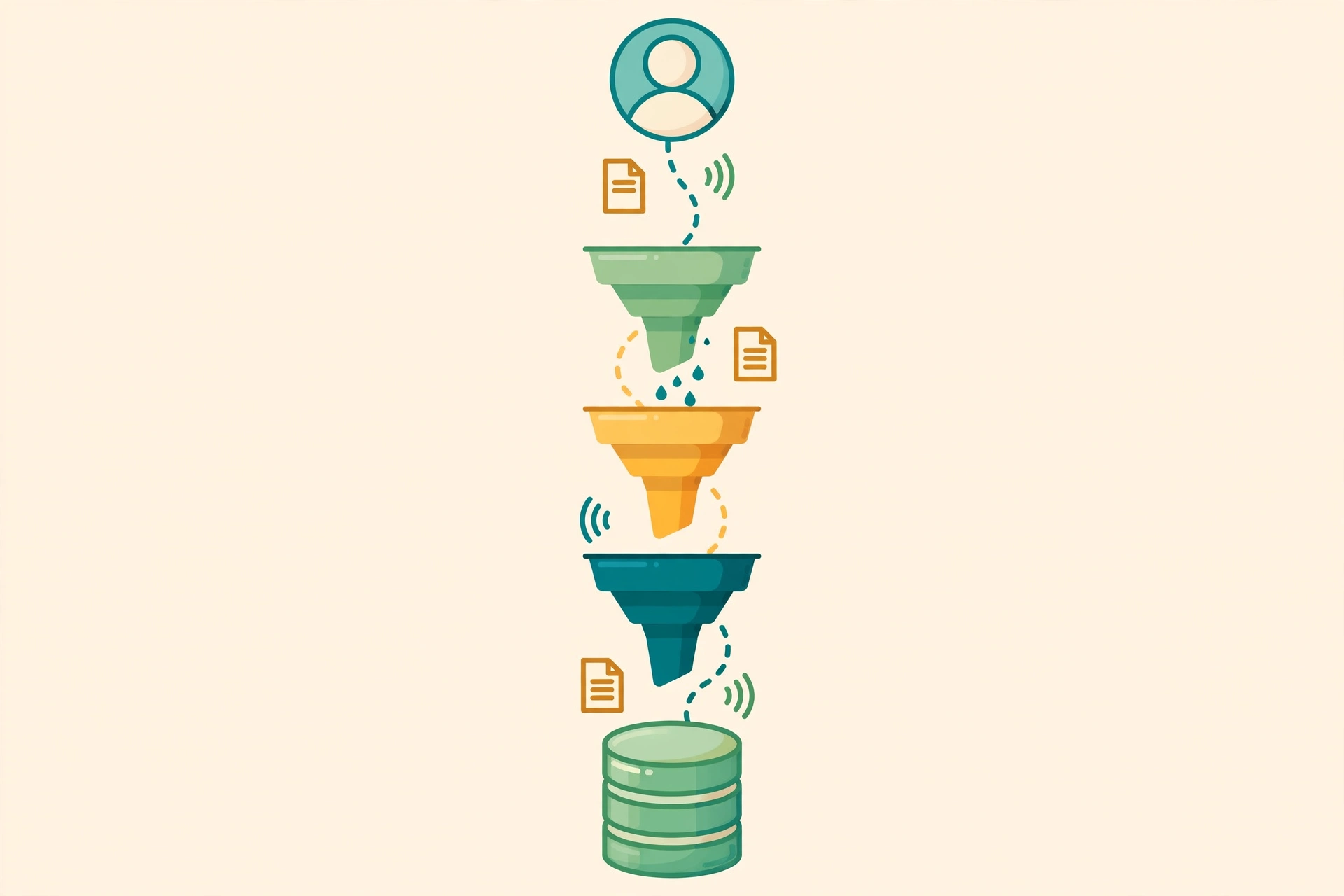
The engine behind it is waterfall enrichment: instead of trusting one provider, Clay queries a marketplace of 150+ data providers in the order you set, cheapest first, and only bills for sources that return data. A simple email lookup can cost as little as 1 data credit, phone numbers run 8–15 credits, and Clay’s own documentation puts a fully enriched record at 6–20 credits.
Then there is Claygent, Clay’s AI web-research agent. You write a task in plain language — “find the VP of Engineering at each company and their GitHub handle” — and it browses the web and returns structured output into your table.
Pricing breakdown: Launch is $185/month ($167 on annual billing) with 2,500 data credits and 15,000 actions per month, plus phone enrichment and a 50,000-row limit. Growth is $495/month ($446 annual) with 6,000 credits and 40,000 actions — this is where CRM auto-sync, HTTP API columns, webhooks, and web intent signals unlock. Every plan includes unlimited seats, so cost is purely a function of consumption. At $0.05 per data credit, a team enriching 2,000–3,000 contacts a month lands on Growth as the realistic entry point.
Real use cases:
- An outbound agency runs every new lead list through a Clay waterfall before it reaches the sequencer, lifting email match rates well above what any single provider returns.
- A RevOps team uses Claygent to research technographic details no single database carries, then routes scored accounts to the right SDR.
- A recruiting firm uses multi-provider phone waterfalls to find mobile numbers Apollo’s own database leaves blank.
Pros:
- Waterfalling across 150+ providers beats any single database on match rates
- Unlimited seats means cost scales with data volume, not headcount
- Claygent handles custom research no database sells off the shelf
- March 2026 pricing overhaul cut data costs 50–90% on most lookups
Cons:
- Launch credits run out fast at real outbound volume — Growth is the honest starting tier
- It is a tool, not a workflow: someone has to build and maintain the tables
Apollo: the database-plus-sequencer every team starts with
Apollo is the opposite shape. It is a 240M+ contact and 30M+ company database with email sequences, a dialer, buying signals, and meeting scheduling built into the same product. Most teams adopt Apollo first because it solves the most basic problem: “give me contacts and let me email them today.”
Apollo’s database is strongest in North America; reviewers consistently report weaker phone and title data in Europe, APAC, and Latin America, so non-US teams should test a regional sample first. Its sequences mix email, calls, and LinkedIn tasks with A/B testing, send from your own connected mailbox, and include domain warming plus inbox rotation. Apollo even has its own waterfall enrichment now: records pull from Apollo’s database first, then cascade through 20+ partner data providers in the order you set.
Pricing breakdown: Free ($0) with monthly email credits and 2 active sequences. Basic is $49/user/month on annual billing ($65 monthly) with unlimited email credits and core sequencing. Professional is $79/user/month ($99 monthly), adding the dialer, AI email assist, advanced reporting, and API access. Organization is $119/user/month, annual only with a 3-seat minimum, adding SSO, custom reports, and admin controls. Paid seats include 30,000, 48,000, or 72,000 credits per seat per year respectively — credits do not roll over, and overage credits run $0.20 each. An email reveal costs 1 credit; a phone number costs 8.
Real use cases:
- A solo founder prospecting from the free plan, sending her first sequences inside a week without touching a second tool.
- A 5-person SDR team running Apollo sequences as their daily driver, with buying signals flagging job changes and intent in the same profiles.
- A sales manager pulling account briefs and CRM-enriched records straight into Salesforce via Apollo’s integrations.
Pros:
- One seat covers database, sequences, dialer, and signals — no stack required
- A genuinely usable free tier lets you prospect before paying anything
- Transparent per-seat pricing and a published pricing page
- Built-in waterfall enrichment reduces (but does not eliminate) the need for external enrichment
Cons:
- Per-seat pricing grows with headcount: 10 users on Organization is $1,190/month
- Data accuracy outside North America trails dedicated enrichment tools
Head-to-head: the four dimensions that matter
1. Data coverage and enrichment quality. Apollo’s database is one source; Clay orchestrates 150+. Apollo’s own waterfall enrichment (20+ partner providers) closes much of the gap, but Apollo charges more for partner lookups — its docs put a typical phone lookup at 8–25 credits, billing every source that returns data. Clay’s entire product is the waterfall, with finer control over provider order and the ability to bring your own API keys. Winner: Clay for depth, Apollo for convenience — one toggle, not a table you maintain.
2. Outreach execution. This is not close. Apollo has multichannel sequences, a dialer, A/B testing, domain warming, and inbox rotation natively. Clay has a basic sequencer for email and otherwise hands off to dedicated sending tools. If your question is “which tool do I send from,” it is Apollo every time. Our comparison of Lemlist, Instantly, and Apollo goes deeper on the sequencing side — read Lemlist vs Instantly vs Apollo if outreach, not data, is your bottleneck.
3. Cost scaling with team size. This is where the verdict lives. Apollo charges per seat: a 5-person SDR team on Professional is $395/month on annual billing ($495 monthly), plus credit overages. That same team on Clay’s Growth plan pays $495/month flat with unlimited seats — and the cost only moves if data volume moves. At 20+ seats, Apollo Organization runs $2,380/month before overages, while Clay Growth is still $495. The crossover point is roughly a dozen active reps: below it, Apollo per-seat math is fine; above it, Clay’s flat rate wins on pure cost. The hidden variable is Apollo’s credit model — heavy phone-data users burn through per-seat credits and face $0.20 overage credits with a 250-credit minimum, which is where Clay starts winning even earlier for phone-heavy teams.
4. Ease of setup. Apollo wins for getting started: sign up, search, sequence. Clay demands someone who thinks in tables and waterfalls — agencies and RevOps teams love it, sales teams without an ops person tend to underuse it. Budget two weeks of workflow design before Clay produces anything a rep can touch.
Final verdict: do you need both?
Here is the honest answer to “do you need both,” broken down by who you are.
Solo founder / small team (1–5 people): buy Apollo, skip Clay. You need contacts and sequences tomorrow, not a data engineering project. Apollo’s free tier and $49–79/seat plans cover the whole motion, and its built-in waterfall enrichment handles most fill-rate gaps. Buy Clay only when you catch yourself thinking “Apollo keeps missing these numbers” every week. Start with Apollo’s free plan and validate the channel before spending anything.
5-person SDR team running serious outbound: Apollo Professional, and add Clay when gaps become expensive. At this size, Apollo Professional ($79/seat/month annual) is the workhorse. Clay’s Launch plan ($185/month) earns its keep the moment list quality starts affecting reply rates — 2,500 data credits clean the marginal records Apollo misses without changing your sending setup.
20+ person sales org: buy both, and stop arguing about it. At this scale, data quality is pipeline math, not a tooling preference. Apollo on Organization ($119/seat/month) remains the reps’ daily driver — database, sequences, dialer, signals — while Clay on Growth ($495/month flat, unlimited seats) sits underneath as the enrichment layer, waterfalling records before they ever reach a sequence. The combined bill is cheaper than a ZoomInfo contract and the fill-rate gains pay for both. Who is wasting money on both? Anyone whose outbound is a side project: if you send 200 emails a month, Clay is a hobby subscription and Apollo’s free tier already covers you.
The most common buying mistake: purchasing Clay’s Launch plan as if it were a contact database. It is not one — it is a month of enrichment for roughly 2,000 contacts, with no contacts included and no sequencer worth sending from. Teams that learn this the expensive way almost always started with Apollo’s free tier and would have been fine there. (Agencies managing outbound for multiple clients are the other obvious “buy both” case — Clay’s per-client tables and Apollo’s seats map perfectly to that model, and our guide to AI proposal tools for freelancers and agencies covers the rest of the agency stack.)
How we compared
We scored both tools on the criteria a sales-team buyer actually feels: enrichment depth and fill rates (weighted highest, because bad data burns pipeline), outreach execution, cost scaling with team size, and setup effort. Pricing checked against the vendors’ pricing pages in October 2026; confirm before you buy.
Frequently asked questions
Do I need Clay if I already have Apollo?
Not always. Apollo’s database plus its built-in waterfall enrichment covers most teams’ data needs. You need Clay when Apollo consistently misses emails or phone numbers in your target accounts, when you want to orchestrate many providers in a specific order, or when per-seat enrichment costs balloon — Clay’s flat workspace pricing with unlimited seats wins at scale.
Can Clay replace Apollo?
Only for the enrichment half of the job. Clay can pull richer contact data than Apollo through its 150+ provider marketplace, but it has no sequencing, dialer, or database of its own. Teams that try to run outbound on Clay alone end up bolting on a sequencer anyway — which is exactly what Apollo already includes.
Which is cheaper: Clay or Apollo?
It depends on headcount. A solo user on Apollo Basic pays $49/month versus Clay’s $185/month Launch plan, so Apollo wins small. At 20+ seats, Apollo Organization costs $2,380/month while Clay Growth stays $495/month flat, so Clay wins big. Roughly a dozen active reps is the crossover point — above it, flat-rate workspace pricing beats per-seat pricing.
Does Apollo have waterfall enrichment?
Yes. Apollo enriches every record from its own 240M+ contact database first, then cascades through 20+ partner data providers in the order you set, covering emails and phone numbers. Expect to pay more per lookup than a plain database reveal — its docs put a typical phone lookup at 8 to 25 credits, with every source that returns data charging.
What is the best Clay alternative for a small team?
If Clay feels like too much tool, Apollo’s built-in waterfall enrichment is the simplest alternative — it lives inside the product you’re already using. For standalone enrichment at a lower flat price, tools like BetterContact or Persana offer self-serve monthly plans.


1 comment