Elicit vs Consensus vs Scite: Best AI Research Tools in 2026
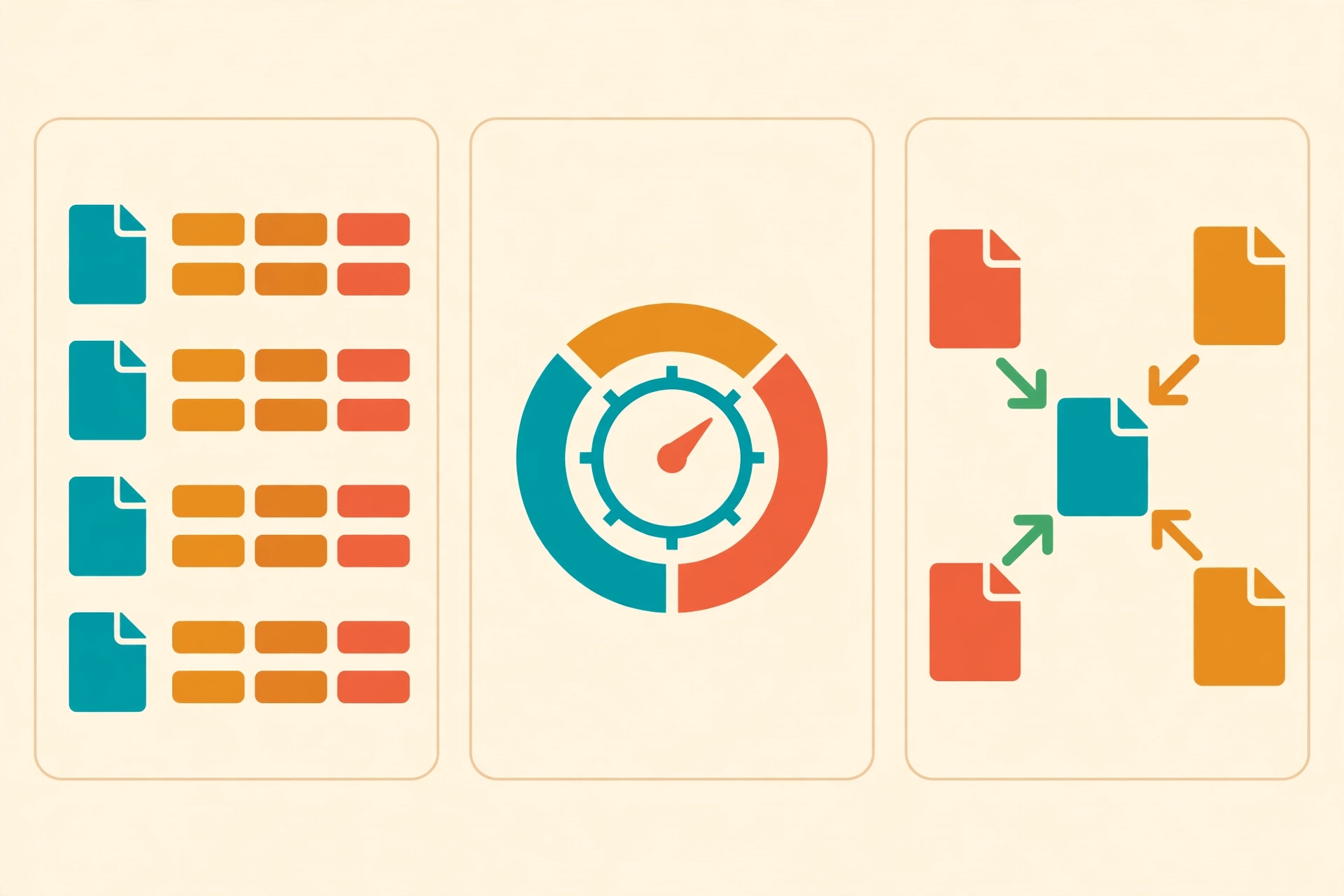
Elicit, Consensus, and Scite are the three AI research tools every researcher, student, and analyst compares — and buying the wrong one is an expensive mistake because they do fundamentally different jobs. Elicit pulls claims and data from papers into extraction tables; Consensus answers research questions with a meter showing what the literature agrees on; Scite shows how papers cite each other — supporting, contrasting, or just mentioning.
By the end of this comparison, you will know exactly which one matches your actual workflow: full literature reviews and meta-analyses, quick evidence checks, or citation integrity before you publish.

Quick verdict
Running a full literature review or meta-analysis? Go with Elicit — its extraction tables turn dozens of papers into a structured comparison grid, starting free with Plus at $11/user/month billed annually and Pro at $49/month. Need quick “what does the research say” answers? Go with Consensus — the Consensus Meter settles yes/no questions at a glance, with a genuinely free tier and Pro at $20/month. Verifying every citation before you submit a paper or grant? Go with Scite — Smart Citations show whether papers were cited to support or refute them, from $20/month billed annually with a 7-day trial. If your budget allows only one subscription, buy the one that matches your bottleneck: extraction, evidence checks, or citation integrity.
Elicit vs Consensus vs Scite at a glance
| Feature | Elicit | Consensus | Scite |
|---|---|---|---|
| Pricing | Free Basic / Plus $11/user/mo annual ($132/yr) / Pro $49/mo monthly ($39/mo annual) / Scale $229/mo monthly ($89/mo annual) / Enterprise custom | Free tier with limits / Pro $20/mo ($144/yr) / Deep $65/mo ($540/yr) / Teams & Enterprise custom | 7-day trial only / Basic from $20/mo annual / Pro $50/mo annual / Team $50/seat/mo / Enterprise custom |
| Free tier | Yes — unlimited search across 138M+ papers, unlimited summaries, chat with full text | Yes — unlimited quick search, 15 Pro messages/mo, 3 Deep reviews/mo, 10 Study Snapshots | No permanent free plan; 7-day trial only |
| Core use case | Systematic literature reviews and structured data extraction | Quick evidence briefs and yes/no research questions | Citation analysis and reference verification |
| Standout feature | Extraction tables — add columns and pull claims, sample sizes, and outcomes across papers | Consensus Meter — visual readout of how much the literature agrees | Smart Citations — every citation classified as supporting, contrasting, or mentioning |
| Integrations | Zotero import, CSV/RIS/BIB exports, API (Pro+) | Zotero, EndNote, Mendeley exports, API/MCP calls (Pro) | Zotero plugin, browser extension, API (Pro+) |
| Support quality | Help docs and email support; dedicated success on Enterprise | Help center and support; student discount (up to 40%) | Email support; student/academic discounts via institutional referral |
Elicit deep dive
Elicit is the systematic-review workhorse. Ask a research question and it searches over 138 million papers, then builds extraction tables where each column pulls a specific variable from every paper: population, intervention, sample size, outcome, methodology. A literature review that took weeks becomes a structured grid in an afternoon.
Pricing is tiered per user, verified live on elicit.com/pricing in October 2026: Basic is free; Plus is $11 per user per month billed annually ($132/year) with exports to RIS, CSV, BIB, PDF, and DOCX plus 5 extraction columns at a time; Pro is $49 per user per month month-to-month or $39 billed annually ($468/year) with the systematic-review workflow, 20 columns at once, and API access; Scale is $229 per month month-to-month or $89 billed annually, adding figure interpretation and team collaboration; Enterprise is custom.
Real use cases: (1) a PhD student screening 2,000 papers for a systematic review, using extraction columns for study design, sample size, and effect size; (2) a policy analyst pulling intervention outcomes from 60 papers into one table for an evidence brief.
Pros:
- Extraction tables are unmatched for structured synthesis work
- Free Basic tier has real research utility — unlimited search and summaries
- Dedicated systematic-review workflow with 5,000-paper screening on Pro
- Exports to RIS, CSV, and BIB plug straight into reference managers
Cons:
- Overkill for quick “what does the evidence say” questions — the setup is the point
- Per-user pricing means a lab of five pays five times over
- No citation-integrity features — it will not warn you if a paper was retracted
- Free tier’s 2-columns-per-table and limited report counts hit hard once you scale
Consensus deep dive
Consensus is the evidence-check engine. Its signature is the Consensus Meter: ask a yes/no research question and it scans 200 million peer-reviewed papers, then shows at a glance how much of the literature agrees. Below the meter you get a synthesized brief with citations, Study Snapshots for individual papers, and filters for study type, date range, and journal quality.
It is the fastest tool of the three for answering a question with defensible evidence. Pro adds unlimited Pro messages, 15 Deep reviews a month (each synthesizing up to 50 papers), unlimited Study Snapshots, and API/MCP access. The free tier is generous: unlimited quick searches, 15 Pro messages a month, 3 Deep reviews, and 10 Study Snapshots. One caution: Consensus’s live pricing page failed to load during our October 2026 check, so the figures here come from multiple published October 2026 pricing roundups — the $8.99/month figure still floating around older roundups is outdated; Pro is now $20/month ($144/year).
Real use cases: (1) a journalist checking whether the evidence really supports a health claim before publishing; (2) a student building the literature-review section of a thesis with cited, filterable paper lists. Pair it with AI document assistants when you need help drafting the prose around the evidence — our guide to the best AI document assistants for professionals covers that side of the workflow.
Pros:
- Consensus Meter gives an answer with visible agreement in seconds
- Strongest free tier of the three — unlimited quick search costs nothing
- $20/month Pro is the cheapest serious research subscription here
- Citation-grounding snippets let you inspect the evidence behind claims
Cons:
- Built for answering questions, not for structured extraction or table-building
- No citation-integrity layer — no supporting/contrasting classification, no retraction alerts
- Coverage is deepest in biomedical and behavioral science; thinner in engineering, law, and humanities
- A synthesis of studies is not a substitute for formal systematic-review methodology
Scite deep dive
Scite answers a question none of the other tools can: when a paper was cited 400 times, did those 400 papers cite it because they agreed — or because they refuted it? Its deep-learning model has analyzed over 1.2 billion citation statements across 187 million papers, extracting the full sentence around each citation and classifying it as supporting, contrasting, or merely mentioning — a badge on every paper showing its real reception.
The two killer features: Reference Check — upload your manuscript PDF before submission and get flagged on retracted references, editorial notices, and heavily contradicted papers — and citation alerts that monitor your reference list over time. The Assistant links every claim to exact sentences in papers, which is more auditable than most chatbot citations. There is no permanent free plan — only a 7-day trial — so Scite is strictly a paid decision: Basic from $20/month billed annually and Pro at $50/month billed annually (API access, patents, clinical-trial and grant datasets, 10,000-paper collections). Team is $50/seat/month; Enterprise is custom.
Real use cases: (1) a researcher running Reference Check on a manuscript the week before journal submission; (2) a grant writer verifying that the three foundational citations in a proposal are still standing — proposals live or die on their references, as our roundup of the best AI proposal tools for freelancers and agencies also shows.
Pros:
- Smart Citations answer whether the literature supported or refuted a paper — nobody else does this
- Retraction and editorial-notice alerts protect you from citing dead research
- Reference Check before submission is a genuinely valuable pre-flight ritual
- Browser extension and Zotero plugin put Smart Citations where researchers already work
Cons:
- No permanent free plan — the 7-day trial is the only way in without paying, and it auto-enrolls you into the plan you picked at signup unless you cancel before day seven, so set a reminder
- ML classification can mislabel nuanced citation phrasing; verify load-bearing citations yourself
- Not built for systematic-review screening or structured extraction
- API access requires the Pro tier, and institutional pricing is a sales conversation
Head-to-head on the criteria that matter most
Literature discovery and question answering. Consensus wins on speed-to-answer: ask a question, get a meter and a cited brief. Elicit wins on depth of discovery — 5,000-paper screening and report-building for systematic work. Scite is not a discovery tool at all; it assumes you already have the papers.
Structured extraction and synthesis. Elicit, and it is not close. Extraction tables with 20 columns at once, custom extractions from uploaded PDFs, and exports to RIS/CSV/BIB are built for meta-analyses. Consensus gives you Study Snapshots and briefs but no tabular synthesis; Scite gives you citation context per paper but no cross-paper extraction.
Citation integrity and trust. Scite, decisively. Supporting/contrasting/mentioning classification, retraction alerts, and Reference Check are unique to it. Neither Elicit nor Consensus will warn you that the paper anchoring your argument was retracted or contradicted by three follow-up studies.
Price-to-value. Consensus takes it: the free tier handles light research indefinitely, and $20/month Pro is the cheapest serious plan here. Elicit is the best value for structured-review work — the free Basic tier is strong, and $11/month Plus is cheap for what it unlocks. Scite is the most expensive entry at $20/month with no free tier, but it sells insurance against citing retracted research, which is cheap compared to a retracted paper.
Final verdict
Match the tool to the job, not the other way around. Running a full literature review, systematic review, or meta-analysis → Elicit. Its extraction tables have no equal here, and the free tier is strong enough that most students should exhaust it before paying. Doing quick evidence checks, clinical questions, or fast “what does the research say” briefs → Consensus. The Consensus Meter settles yes/no questions at a glance, and $20/month Pro is the cheapest serious research subscription in this trio. Verifying every citation before submission, monitoring a reference list for retractions, or building on contested findings → Scite. Smart Citations answer whether papers were cited to support or refute them — a citation count alone tells you nothing.
The power workflow: scope the question with Consensus, build the evidence table in Elicit, then run the finished reference list through Scite’s Reference Check before submission. But most researchers should buy only the one that matches their actual bottleneck — and our guide to the best AI study tools for students covers the writing side.
How we compared
We scored the three tools on literature discovery and question answering, structured extraction depth, citation integrity, and price-to-value — weighting extraction highest for review work and integrity highest for pre-publication work. Pricing checked in October 2026: Elicit verified live; Consensus’s and Scite’s pages did not render prices, so their figures come from September/October 2026 pricing data; confirm before you buy.
Frequently asked questions
Is Elicit free to use?
Yes — Elicit’s Basic plan is free and includes unlimited search across 138 million papers, unlimited summaries, and chat with full-text access. Paid plans start at $11 per user per month billed annually (Plus) and $49 per month for Pro (systematic-review workflow, API access).
What is the Consensus Meter?
The Consensus Meter is Consensus’s signature feature: ask a yes/no research question and it scans peer-reviewed papers to show how much of the literature agrees, disagrees, or is uncertain — visualized as a meter. Each claim links to the underlying papers so you can verify it.
Can Scite detect retracted papers?
Yes. Scite tracks retractions and editorial notices, and its Reference Check feature lets you upload a manuscript PDF before submission to flag retracted references and papers with heavy contrasting citations. Citation alerts also monitor your saved papers for new retractions over time.
Elicit vs Consensus: which is better for a systematic review?
Elicit. Its dedicated systematic-review workflow screens up to 5,000 papers, builds extraction tables with up to 20 columns at once, and generates reports drawing on up to 135 data sources. Consensus answers questions rather than building review tables — better for quick evidence checks, not systematic work.



0 comments